Correction from the plumber:
The reason the ABS pipe is wrapped in foam when in concrete is to allow expansion and contraction of the pipes so they don't wear and fracture over the years. Thanks Coady!
===========================================================
The
APEX wall building blocks arrived today. The road I live on is not wide enough at my driveway to provide access for the large delivery truck. For this reason, the material was moved off the delivery truck to a smaller flatbed for shuttling about 1.5 miles to the job site. A forklift removed pallets from the delivery truck – see pic below.
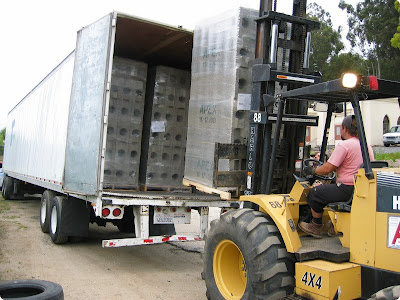
The pallets were transferred to a flatbed truck. The pallets arrive shrink wrapped, but they were a bit top heavy. The shrink wrapping was cut and the top 2 or 3 rows were restacked by hand. The following pic shows unloading from the flatbed at the jobsite.

The forklift broke down at one point, and 5 full pallets were moved by hand. Each pallet contains 24 blocks, so a total of 576 blocks were moved today. Each block weighs 52 pounds, so almost 15 tons were moved. It was a day of hard work, and everyone was ready for a beer when we were through. Here is a pic of about half the material that was moved by hand.

These will turn into walls over the next several weeks. Here is a pic of 2 blocks shown in position over the rebar.

While the crew was shuttling blocks, Coady and Adam finished up most of the preliminary plumbing. The kitchen and shower drains and vents were completed. Here is a pic showing all of the plumbing so far.

The pipes that come into contact with concrete get wrapped in a white foam material. The foam acts as a cushion providing a bit of protection during an earthquake. There is a pair of
French drains installed below the slab. This is an unusual location for a French drain. They are usually installed outside the walls to drain water away from the foundation. These French drains will remove any
Radon gas, which is heavier than air, from below the slab. We live in an area where Radon gas may be present at levels high enough to create a health concern.
Green comment for today:Consider building with a recycled wall material. The APEX blocks contain 85% by volume recycled Expanded
Polystyrene foam (EPS). On the one hand, I don’t like perpetuating the use of polystyrene. But on the other hand, the recycled foam blocks have some advantages:
- Recycling the foam keeps it out of landfills. Let’s face it, the use of polystyrene is not stopping today. That material needs to go somewhere.
- Petroleum is an incredible material with many uses. EPS provides an insulation R-value of 4 per inch which is comparable to other available materials.
- The block makes a great Insulated Concrete Form (ICF) resistant to rot, fire and termites.
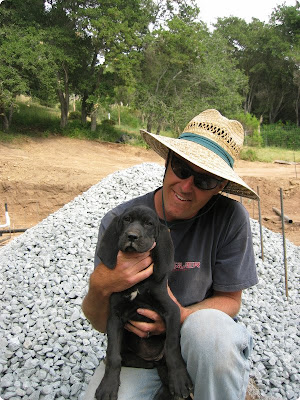
I leave you with a pic of Justin and his cute puppy Stella – the construction mascot. She’ll grow to nearly full size during this project.
Thanks for reading. Your comments are welcome.
 Green comment for today:





 Posts
Posts


